





News and Curiosity
Bulgarian Squat: Explanation and Benefits
Bulgarian Squats: What Are They?
The Bulgarian squat, also known as the Bulgarian split squat, is an exercise often included in fitness circuits. It is a specific exercise aimed at toning and growing the muscles of the glutes, although it also engages other muscles of the lower limbs, such as the hamstrings and quadriceps. In addition to improving the strength of the legs and glutes, Bulgarian squats also enhance balance, flexibility, and stability.How to Perform Bulgarian Squats?
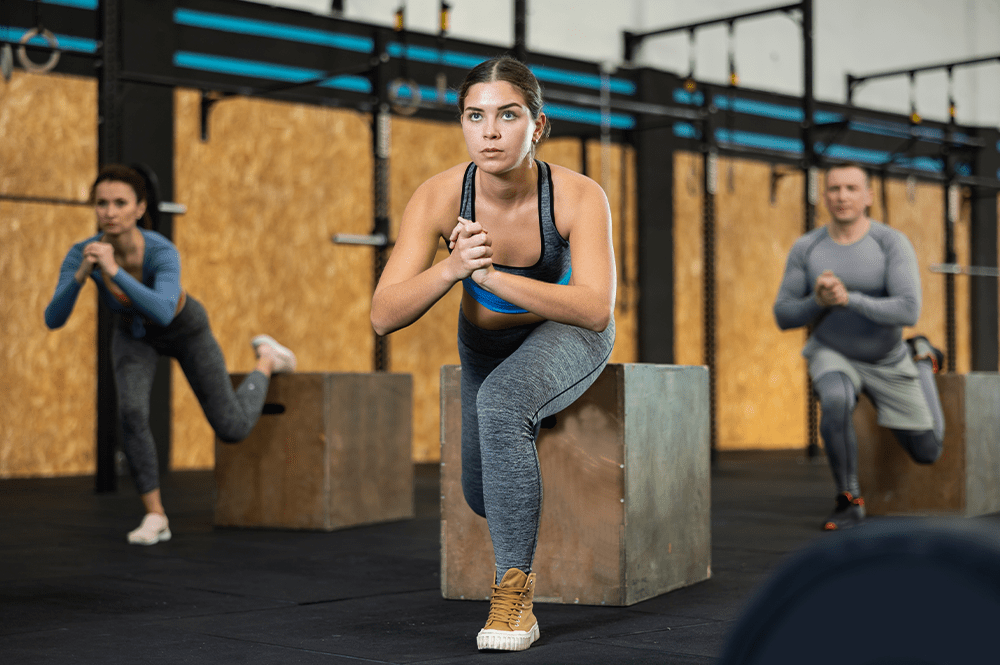
Like all exercises in a training circuit, Bulgarian squats are effective and provide significant benefits if performed correctly. Therefore, it is important to rely on experienced professionals and avoid improvising the movement, which, if done incorrectly, can lead to strains or knee injuries. The Bulgarian squat is a single-leg squat, meaning it is performed with one leg, challenging the strength, balance, and flexibility of the legs. It requires the use of a stable support, such as a bench, to ensure proper execution of the movement.Execution of Bulgarian Squats
Starting with one leg, place the foot on the support positioned behind you, while the other leg, which performs the movement, is firmly planted on the ground at a distance that allows you to lunge perpendicularly to the floor. Perform the lunge by slightly moving your hips back and leaning your torso slightly forward: the knee should not extend beyond the toes. Although both legs are working, the majority of the effort is performed by the leg that remains on the ground to support the weight. The abdomen should be contracted and your gaze fixed ahead.Which Muscles Are Involved in Bulgarian Split Squats?
The primary muscles involved in Bulgarian squats are:- Quadriceps
- Glutes
- Hamstrings
Benefits of Bulgarian Squats
Incorporating Bulgarian squats into your workout is very beneficial, especially if you want to train and increase the muscles of the glutes. However, the advantages of this exercise are numerous:- Increased Muscle Strength: This exercise increases muscle strength, especially in the lower limbs. Performing the activity on one leg and then on the other requires greater effort from the leg muscles (quadriceps) and glutes, which are subsequently engaged by the movement.
- Improved Balance: Being a single-leg exercise, it also works on balance and stability. Correct execution of the Bulgarian squat also improves posture and overall body coordination.
- Enhanced Hip Flexibility: Due to the distance of the foot from the support behind, it works on the glute muscles and hip joint. This area is known to be very tight due to sedentary jobs and is the point where negativity and stress accumulate: this exercise works to loosen this area, improving psycho-physical well-being.